Lethbridge, AB, CAN
Items located in Lethbridge County, AB
All
Auction
Industries: step-deck-trailer
2 results
What is a step deck trailer/drop deck trailer?
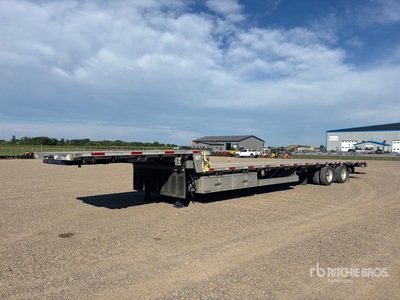
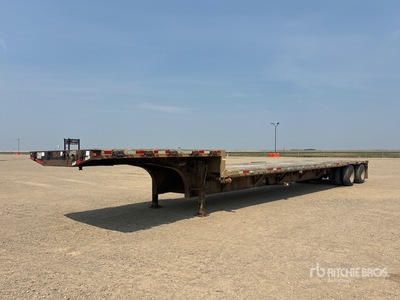
A step deck trailer — also called a drop deck trailer — is designed for a lighter load than lowboy trailers and hauls loads that are not suited to enclosed van trailers. It is equipped with an upper deck that steps down to a lower deck, and buying a used step deck trailer for sale is a cost-efficient alternative to renting or buying new.
What size is a standard step deck trailer
Most step deck trailers run 48 or 53 feet overall and 8 feet 6 inches wide, the federally mandated maximum width for interstate hauling.
- Overall length: 48 ft or 53 ft, the two most common lengths in the used market.
- Upper deck (gooseneck) length: around 10 to 11 feet, sitting roughly 58 to 60 inches off the ground.
- Lower deck (main deck) length: the remainder of the trailer, typically 37 to 43 feet depending on overall length.
- Lower deck height: varies by manufacturer, from as low as 34 inches up to 42 inches.
- Width: 8 ft 6 in (102 inches), standard across virtually all step decks.
How much height clearance does a step deck trailer give you
A lower deck height of 42 inches leaves about 10 feet of legal cargo height in most states that cap total height at 13 feet 6 inches, without needing an oversize permit.
The math is straightforward: 162 inches of legal height minus a 42-inch deck leaves 120 inches, or 10 feet, for the load itself. A lower deck height means more usable cargo clearance, which is the main reason fleets choose a step deck over a standard flatbed for taller equipment.
What axle configuration does a step deck trailer need
Axle configuration comes down to how much the load weighs — a standard tandem axle covers most freight, while heavier equipment calls for a third axle or an extendable deck.
| Configuration | Typical legal capacity | Best suited for |
|---|---|---|
| Tandem axle (2-axle) | Up to 48,000 lbs of cargo (34,000 lbs on the tandem axle group) | Standard freight, palletized and crated goods, and most construction equipment within weight limits |
| Tri-axle (3-axle) | 42,500+ lbs on the axle group, varying by state | Heavier machinery and equipment that exceeds tandem capacity but doesn't need a full heavy-haul trailer |
| Extendable step deck | Capacity similar to tandem/tri-axle; length is the variable, not weight | Long loads that don't fit a standard deck — poles, pipe, girders, and oversized machinery components |
A tri-axle adds roughly 1,000 to 2,300 lbs of empty trailer weight over a tandem, so it's worth confirming a load actually needs the extra axle before paying for the added tare weight. Extendable step decks trade a fixed deck length for adjustability, typically stretching well beyond the standard 37 to 43-foot main deck to accommodate freight that won't fit on a fixed-length trailer.
Step deck vs flatbed trailer
That lower deck is what buys the extra legal height described above, making step decks the better fit for tall equipment loads that would need a permit on a standard flatbed.