

Aggregate Hoppers For Sale
All
Auction
Buy Now
Types: Aggregate Surge Bin
4 results
Polotitlán de la Ilustración, Mexico
Closing: Fri, Dec 4
Polotitlán de la Ilustración, Mexico
Closing: Fri, Dec 4

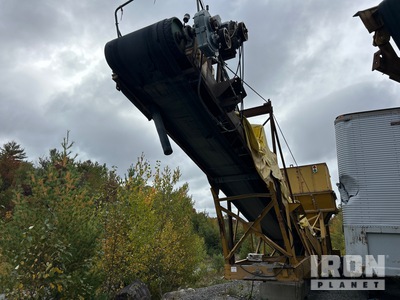
Aggregate surge bins for sale
Surge bins — sometimes called day bins or surge/day bins — sit between your primary feed source and the rest of your aggregate handling system, holding a working volume of material so production keeps moving when upstream supply hiccups. On a crushing spread, the surge bin buffers the cone or impactor against feed gaps. At an asphalt plant, the day bin holds finished mix ahead of the truck scale. In a wash plant, it gives you a steady draw to the screen deck instead of feast-or-famine surges from the loader. If you're sizing a bin for a portable spread or replacing a worn-out unit on a fixed plant, you'll find both stationary and portable configurations in our listings.
Daybin vs. surge bin: what's the difference?
The terms get used interchangeably, and on most jobsites they describe the same piece of equipment. Strictly speaking, a surge bin is about smoothing flow — taking irregular feed and metering it out at a steady rate. A daybin (or day bin) refers to holding roughly a shift's worth of material, typically at an asphalt or concrete plant, ready to load trucks at peak. Same vessel, different emphasis. When you see "surge/day bins" in our category, expect to find both styles: high-tonnage portable units with truck-loading clearance, and tower-style plant bins with multiple compartments for sized product.
Common configurations you'll find in our listings
- Portable surge bins: Skid- or wheel-mounted units with 50- to 250-ton capacity, hydraulic legs, and a discharge conveyor or gate feeder underneath. Built for crushing and screening spreads that move between pits.
- Stationary plant bins: Multi-compartment tower bins feeding asphalt plants, ready-mix operations, or rail load-out. Sized in the 100- to 500-ton range with bin vibrators and arch breakers.
- Truck-loading day bins: Elevated structures with clamshell or radial gates, sized so a tandem or quad-axle can pull underneath and load in a single drop.
- Integrated surge bins: Built into a larger plant — bolted to the underside of a screen, or part of a portable crushing chassis from manufacturers like Telsmith, Kolberg-Pioneer, McCloskey, and Masaba.
Why buy a used surge bin?
Surge bins are heavy steel structures with relatively few moving parts — which makes them strong candidates for the used market. A well-built bin from a name like Cedarapids, Telsmith, KPI-JCI, Masaba, or McCloskey will run for decades if the liners are maintained and the support structure hasn't been overloaded. Buying used typically saves 40–60% over new, and unlike crushers or generators, there's no engine to depreciate. You're paying for steel, geometry, and a discharge system — and inspecting those on a used unit is straightforward. Pair a used surge bin with your existing aggregate conveyor and feeder, and you've built out a production line for a fraction of new-equipment cost.
What to look for when buying a used surge bin
- Liner wear and bin walls: Check the interior for thinning steel, blown-out wear plates, or weld repairs at the discharge throat. Abrasion-resistant (AR) liners can be replaced, but a bin with thin shell plate behind worn liners is a much bigger job.
- Discharge gate or feeder: Hydraulic clamshell gates, radial gates, and belt feeders all wear differently. Cycle the gate fully open and closed, watch for binding, and inspect the cylinder rods for pitting. On feeder-discharge bins, check the belt, idlers, and head pulley lagging.
- Support structure and legs: Look for bent or kinked legs, cracked welds at gusset plates, and any evidence the bin has been overloaded or hit. On portable units, inspect the running gear, kingpin, and hydraulic landing legs.
- Bin vibrators and arch breakers: Sticky material — wet sand, fines, recycled asphalt — bridges easily. Make sure vibrator mounts are intact and any pneumatic or electric vibrators run when powered.
- Structural cracks at high-stress points: The discharge cone, gate frame, and support saddles take the most punishment. A crack here is repairable but worth pricing into your offer.
- Match capacity to your production rate: A surge bin should hold roughly 5–15 minutes of plant output. Oversize and you'll have segregation and bridging; undersize and the bin defeats its own purpose.
Brands worth knowing
The names that come up most often in our surge bin listings are the heavy-hitters of North American aggregate equipment: Telsmith, Cedarapids, KPI-JCI (Kolberg-Pioneer), Masaba, McCloskey, Superior Industries, and Eagle Iron Works. For asphalt-side day bins, expect to see Astec, Gencor, CMI, and Stansteel. Parts and liner kits are widely available for all of these, and most regional aggregate dealers can support service even on older units.
Buy used aggregate surge bins at Ritchie Bros.
Browse our current inventory of surge bins, day bins, and related aggregate handling equipment from sellers across North America and beyond. Every listing includes detailed photos, dimensions, and capacity specs, and most lots come with on-site inspection reports so you know the condition of the liners, discharge gate, and structural steel before you bid. Whether you're outfitting a portable crushing spread or replacing a worn-out plant bin, you'll find options from Telsmith, KPI-JCI, Masaba, and other major aggregate brands at our weekly auctions on rbauction.com and IronPlanet.com.